


Information
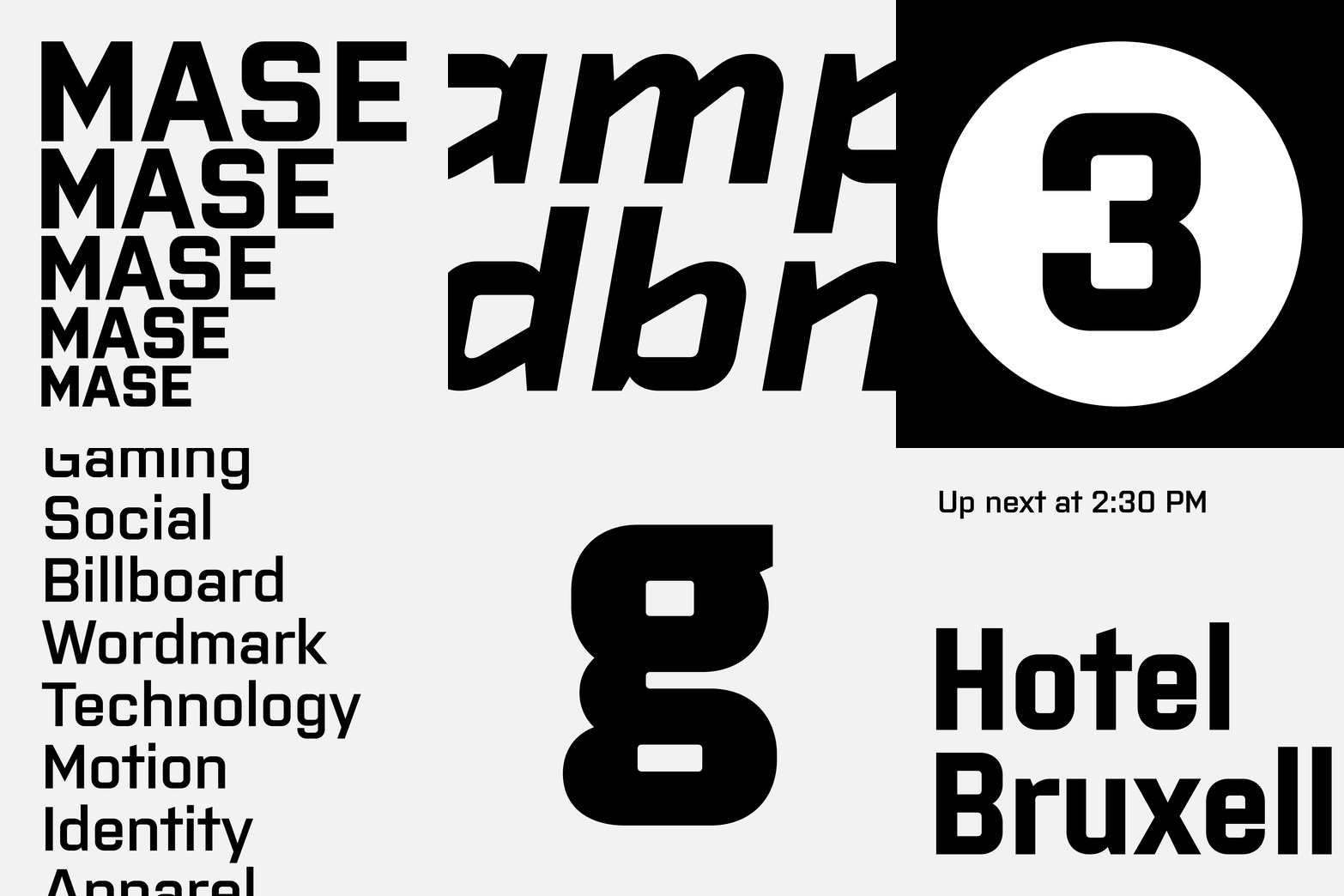
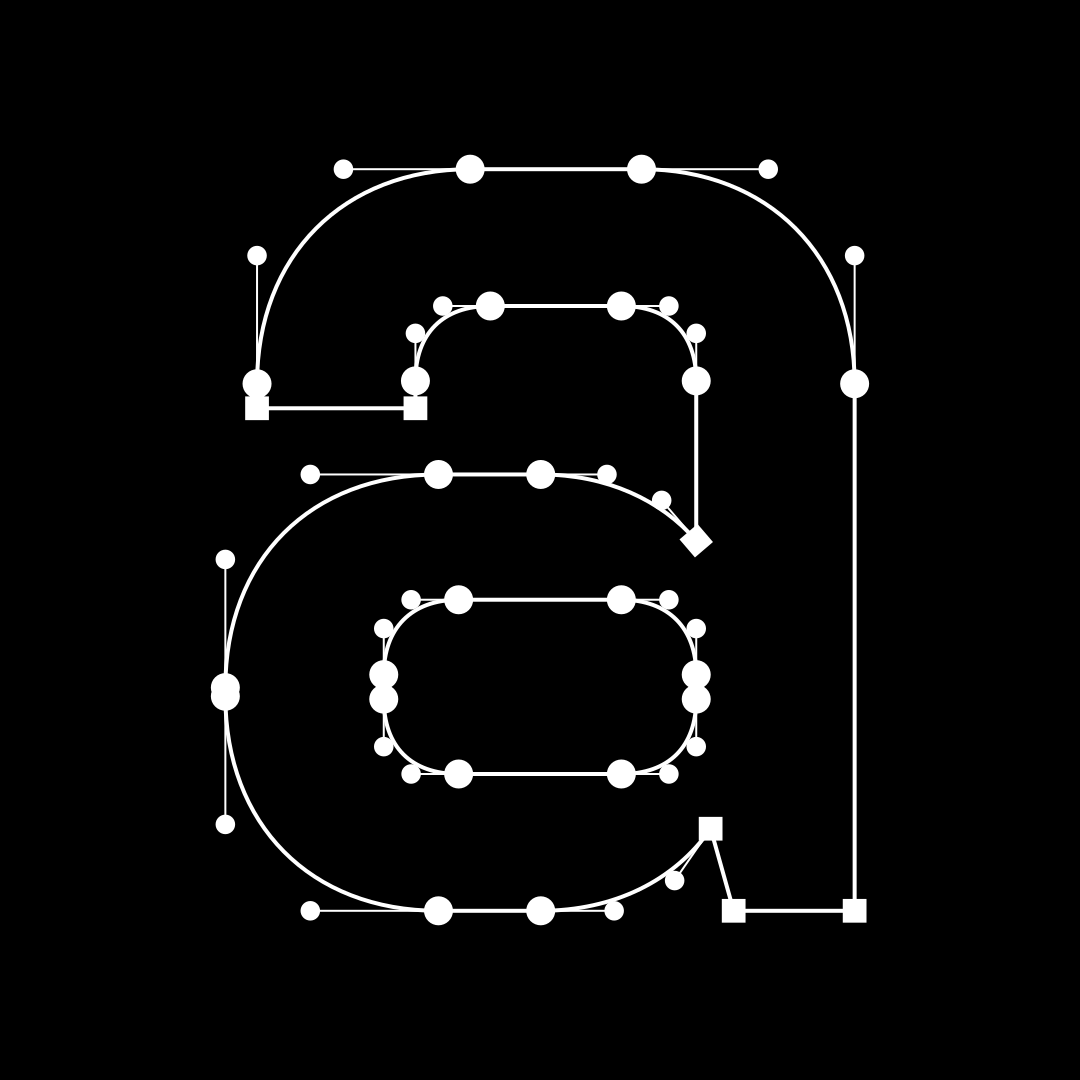
Purista is a geometric sans serif with a distinctly technical character. Its letterforms are based on rectangular proportions, simple geometric forms, and strictly horizontal or vertical terminals. Despite its systematic construction, optical corrections ensure balanced proportions, rhythm, and legibility throughout the family.
Alongside the core family, the type system now includes the narrower Cond, the wider Wide, and the monospaced Mono. All four families are available in a broad range of weights, from Thin, which reveals the precision of the geometric construction, to Black, which transforms the same principles into dense, assertive forms.
Each weight is available in two slanted variants: Italic introduces distinctive forms for selected lowercase characters, creating a more pronounced contrast with the upright, while Oblique retains the construction of the upright. Stylistic sets provide further alternatives, allowing the character of the typeface to be adjusted without compromising its underlying structure.
Purista combines a strong visual identity with an unusually broad range of expression, making it suitable for typography at very different scales — from visual identities and information systems to editorial design, user interfaces, and bold display typography.
Read more in the editorial →
- Number of fonts in a family: 63
- Release date: 2007
- Current version: 2.001
- Available formats: OTF, TTF, WOFF, WOFF2
- Variable file: Available upon request with the purchase of the complete type family.
- Design: Tomáš Brousil
- Afar
- Afrikaans
- Albanian
- Aranese
- Araona
- Aromanian
- Aymara
- Ayoreo
- Azeri (Latin)
- Basque
- Bemba
- Bislama
- Bosnian
- Breton
- Catalan
- Cavineña
- Chamorro
- Cheyenne
- Chichewa
- Chokwe
- Chuukese
- Cofán
- Comorian
- Cornish
- Croatian
- Czech
- Danish
- Dutch
- English
- Esperanto
- Estonian
- Faroese
- Fijian
- Finnish
- French
- Frisian
- Friulian
- Galician
- Ganda
- German
- Gikuyu
- Greenlandic
- Guaraní
- Guarani
- Gwich’in
- Haitian
- Hawaiian
- Hungarian
- Icelandic
- Ido
- Indonesian
- Interlingua
- Irish Gaelic
- Italian
- Javanese
- Kashubian
- Kinyarwanda
- Kiribati
- Kirundi
- Kituba
- Kongo
- Kurdish (Latin)
- Kwanyama
- Ladin
- Latvian
- Lithuanian
- Luba-Kasai
- Luxemburgish
- Malagasy
- Malay
- Maltese
- Manx
- Māori
- Marquesan
- Marshallese
- Montenegrin
- Náhuatl
- Nauruan
- Navajo
- Ndebele (Northern)
- Ndebele (Southern)
- Norfuk
- Norn
- Norwegian (Bokmål)
- Norwegian (Nynorsk)
- Nyanja
- Occitan
- Old Norse
- Oromo
- Otomi
- Palauan
- Papiamento
- Pinyin
- Polish
- Portuguese
- Quechua
- Rarotongan
- Rhaeto-Romanic
- Romaji
- Romani
- Romanian
- Sámi (Inari)
- Sámi (Lule)
- Sámi (Northern)
- Sámi (Southern)
- Samoan
- Sango
- Sardinian
- Scottish Gaelic
- Serbian (Latin)
- Seychelles Creole
- Shona
- Silesian
- Slovak
- Slovene
- Somali (Latin)
- Sorbian
- Sotho
- Spanish
- Sundanese
- Swahili
- Swati
- Swedish
- Tagalog (Filipino)
- Tahitian
- Tetum
- Tok Pisin
- Tokelauan
- Tongan
- Tsonga
- Tswana
- Turkish
- Tuvalu
- Veps
- Welsh
- Wolof
- Xhosa
- Zulu
Styles
Specimen
Purista Cond Thin
from 39 EUR
Purista Cond Thin Italic
from 39 EUR
Purista Cond Thin Oblique
from 39 EUR
Purista Cond Light
from 39 EUR
Purista Cond Light Italic
from 39 EUR
Purista Cond Light Oblique
from 39 EUR
Purista Cond Medium
from 39 EUR
Purista Cond Medium Italic
from 39 EUR
Purista Cond Medium Oblique
from 39 EUR
Purista Cond SemiBold
from 39 EUR
Purista Cond SemiBold Italic
from 39 EUR
Purista Cond SemiBold Oblique
from 39 EUR
Purista Cond Bold
from 39 EUR
Purista Cond Bold Italic
from 39 EUR
Purista Cond Bold Oblique
from 39 EUR
Purista Cond Heavy
from 39 EUR
Purista Cond Heavy Italic
from 39 EUR
Purista Cond Heavy Oblique
from 39 EUR
Purista Cond Black
from 39 EUR
Purista Cond Black Italic
from 39 EUR
Purista Cond Black Oblique
from 39 EUR
Purista Thin
from 39 EUR
Purista Thin Italic
from 39 EUR
Purista Thin Oblique
from 39 EUR
Purista Light
from 39 EUR
Purista Light Italic
from 39 EUR
Purista Light Oblique
from 39 EUR
Purista Medium
from 39 EUR
Purista Medium Italic
from 39 EUR
Purista Medium Oblique
from 39 EUR
Purista SemiBold
from 39 EUR
Purista SemiBold Italic
from 39 EUR
Purista SemiBold Oblique
from 39 EUR
Purista Bold
from 39 EUR
Purista Bold Italic
from 39 EUR
Purista Bold Oblique
from 39 EUR
Purista Heavy
from 39 EUR
Purista Heavy Italic
from 39 EUR
Purista Heavy Oblique
from 39 EUR
Purista Black
from 39 EUR
Purista Black Italic
from 39 EUR
Purista Black Oblique
from 39 EUR
Purista Wide Thin
from 39 EUR
Purista Wide Thin Italic
from 39 EUR
Purista Wide Thin Oblique
from 39 EUR
Purista Wide Light
from 39 EUR
Purista Wide Light Italic
from 39 EUR
Purista Wide Light Oblique
from 39 EUR
Purista Wide Medium
from 39 EUR
Purista Wide Medium Italic
from 39 EUR
Purista Wide Medium Oblique
from 39 EUR
Purista Wide SemiBold
from 39 EUR
Purista Wide SemiBold Italic
from 39 EUR
Purista Wide SemiBold Oblique
from 39 EUR
Purista Wide Bold
from 39 EUR
Purista Wide Bold Italic
from 39 EUR
Purista Wide Bold Oblique
from 39 EUR
Purista Wide Heavy
from 39 EUR
Purista Wide Heavy Italic
from 39 EUR
Purista Wide Heavy Oblique
from 39 EUR
Purista Wide Black
from 39 EUR
Purista Wide Black Italic
from 39 EUR
Purista Wide Black Oblique
from 39 EUR
Purista Medium
from 39 EUR
Purista Medium Italic
from 39 EUR
Purista Medium
from 39 EUR
OpenType features
Idealistic