Monopol

Information

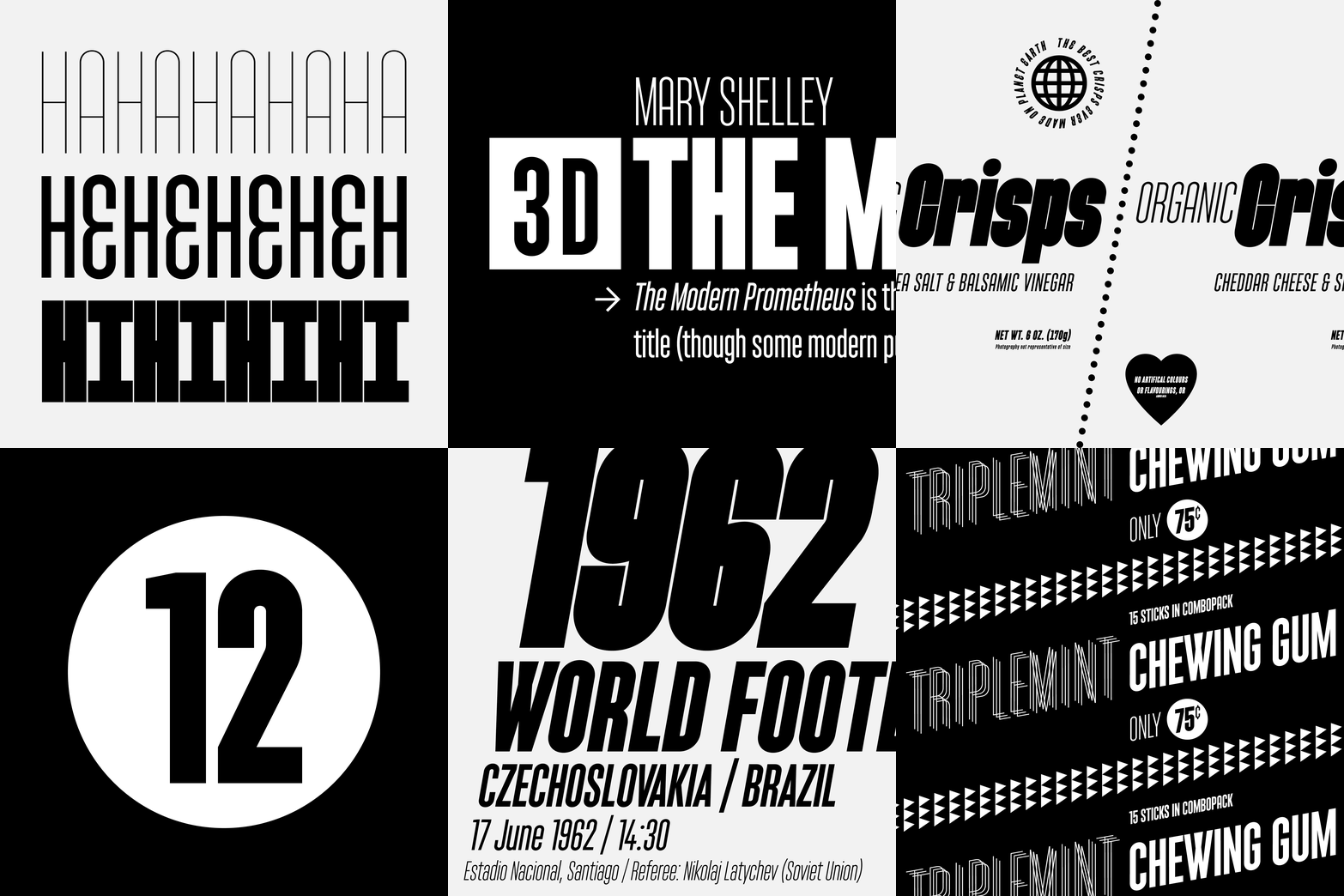
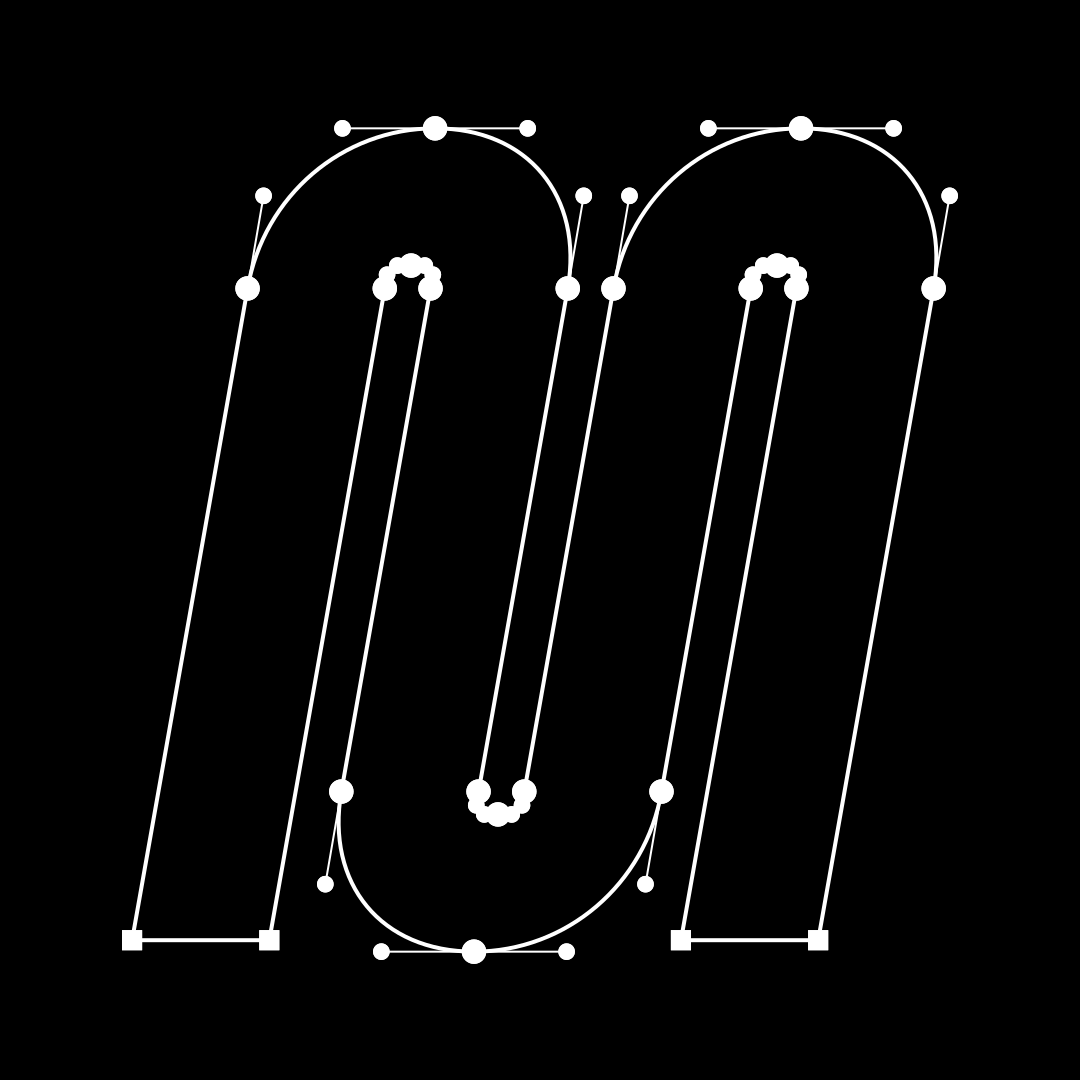
This monolinear condensed typeface is based on strictly geometric principles. The weight range extends from the thinnest possible hairline styles all the way to black, pushed to the very limit of darkness, where, conversely, the light spaces within the glyphs are formed with the same thickness as the stem at the other end of the spectrum. The updated version of the Monopol typeface adds alternate glyphs, missing weights, and variable format.

  • Number of fonts in a family: 18
  • Release date: 2010
  • Current version: 1.000
  • Available formats: OTF, TTF, WOFF, WOFF2
  • Variable file: Available upon request with the purchase of the complete type family.
  • Design: Tomáš Brousil
117 languages
  • Afar
  • Afrikaans
  • Albanian
  • Aromanian
  • Aymara
  • Azeri (Latin)
  • Basque
  • Bemba
  • Bislama
  • Bosnian
  • Breton
  • Catalan
  • Chamorro
  • Cheyenne
  • Chichewa
  • Chuukese
  • Cofán
  • Cornish
  • Croatian
  • Czech
  • Danish
  • Dutch
  • English
  • Esperanto
  • Estonian
  • Faroese
  • Fijian
  • Finnish
  • French
  • Frisian
  • Friulian
  • Galician
  • Ganda
  • German
  • Gikuyu
  • Greenlandic
  • Guaraní
  • Gwich’in
  • Haitian
  • Hawaiian
  • Hungarian
  • Icelandic
  • Ido
  • Indonesian
  • Interlingua
  • Irish Gaelic
  • Italian
  • Javanese
  • Kashubian
  • Kinyarwanda
  • Kiribati
  • Kirundi
  • Kituba
  • Kurdish (Latin)
  • Ladin
  • Latvian
  • Lithuanian
  • Luxemburgish
  • Malagasy
  • Malay
  • Maltese
  • Manx
  • Māori
  • Marshallese
  • Montenegrin
  • Náhuatl
  • Nauruan
  • Navajo
  • Ndebele (Northern)
  • Ndebele (Southern)
  • Norfuk
  • Norn
  • Norwegian (Bokmål)
  • Occitan
  • Palauan
  • Papiamento
  • Pinyin
  • Polish
  • Portuguese
  • Quechua
  • Rhaeto-Romanic
  • Romaji
  • Romanian
  • Sámi (Inari)
  • Sámi (Lule)
  • Sámi (Northern)
  • Sámi (Southern)
  • Samoan
  • Sango
  • Sardinian
  • Scottish Gaelic
  • Seychelles Creole
  • Shona
  • Silesian
  • Slovak
  • Slovene
  • Somali (Latin)
  • Sotho
  • Spanish
  • Swahili
  • Swati
  • Swedish
  • Tagalog (Filipino)
  • Tahitian
  • Tetum
  • Tok Pisin
  • Tokelauan
  • Tongan
  • Tsonga
  • Tswana
  • Turkish
  • Tuvalu
  • Veps
  • Welsh
  • Wolof
  • Xhosa
  • Zulu

Styles

Thin 
Thin Italic 
ExtraLight 
ExtraLight Italic 
Light 
Light Italic 
Regular 
Italic 
Medium 
Medium Italic 
SemiBold 
SemiBold Italic 
Bold 
Bold Italic 
ExtraBold 
ExtraBold Italic 
Black 
Black Italic

Specimen

Monopol Thin

from 39 EUR

Stratospheric

Monopol Thin Italic

from 39 EUR

Weatherology

Monopol ExtraLight

from 39 EUR

Cosmopolitic

Monopol ExtraLight Italic

from 39 EUR

Zoomagnetic

Monopol Light

from 39 EUR

Fatalistically

Monopol Light Italic

from 39 EUR

Antibacterial

Monopol Regular

from 39 EUR

Musculation

Monopol Italic

from 39 EUR

Industrialize

Monopol Medium

from 39 EUR

Discontinue

Monopol Medium Italic

from 39 EUR

Brightsmith

Monopol SemiBold

from 39 EUR

Appellation

Monopol SemiBold Italic

from 39 EUR

Westernize

Monopol Bold

from 39 EUR

Oceanside

Monopol Bold Italic

from 39 EUR

Microlevel

Monopol ExtraBold

from 39 EUR

Simulation

Monopol ExtraBold Italic

from 39 EUR

Unquested

Monopol Black

from 39 EUR

Bibliopolar

Monopol Black Italic

from 39 EUR

Commoner

Monopol Medium

from 39 EUR

The origins of Monopoly can be traced to 1903, when the American anti-monopolist Lizzie Magie created a board game called The Landlord’s Game. She designed it as an educational activity intended to explain the single-tax ideas proposed by Henry George in Progress and Poverty, a work criticizing land monopolies, unequal wealth distribution, and broader economic inequality within modern industrial society.

Monopol Medium Italic

from 39 EUR

Magie also introduced several features that later became closely associated with Monopoly, including a square playing path with corner spaces and a designated starting position. Players repeatedly moved around the board while buying property and collecting money, mechanics intended not only to entertain participants but also to encourage reflection on ownership, competition, taxation, and economic inequality in society.

Monopol Medium

from 39 EUR

Magie developed two alternative sets of rules. One version reflected anti-monopolist ideas, rewarding all players when wealth was generated, while the other version focused on monopolistic competition, encouraging players to dominate opponents by acquiring control over property. Between 1906 and the 1930s, numerous variations of the game appeared, maintaining the central concept of purchasing land, developing property, and charging rent. Later versions introduced cardboard houses and higher rental values as properties were improved. Magie patented a revised version of the game in 1923. According to an advertisement in The Christian Science Monitor, Charles Todd of Philadelphia recalled that in 1932 his friend Esther Jones and her husband Charles Darrow visited for dinner. After the meal, the Todds introduced Darrow to The Landlord’s Game, which they played several times. Darrow had not encountered the game previously and requested written rules. He later adapted the concept and began distributing his own version under the title Monopoly. His modifications included adding symbols representing electricity and water utilities as well as railway stations. Darrow produced early boards using oilcloth decorated by an artist. One of these boards is now preserved in the collection of The Strong National Museum of Play, where it was acquired at a Sotheby’s auction in 2010. Parker Brothers later acquired the rights to the game from Charles Darrow. After discovering that Darrow was not the original creator of the concept, the company also purchased the patent held by Lizzie Magie for a payment of 500 dollars, thereby securing legal control over the earlier version of the game. These developments contributed significantly to Monopoly becoming one of the most commercially successful board games worldwide.

OpenType features

Anti Aliasing

Glyphs

Monopol in use