


Information
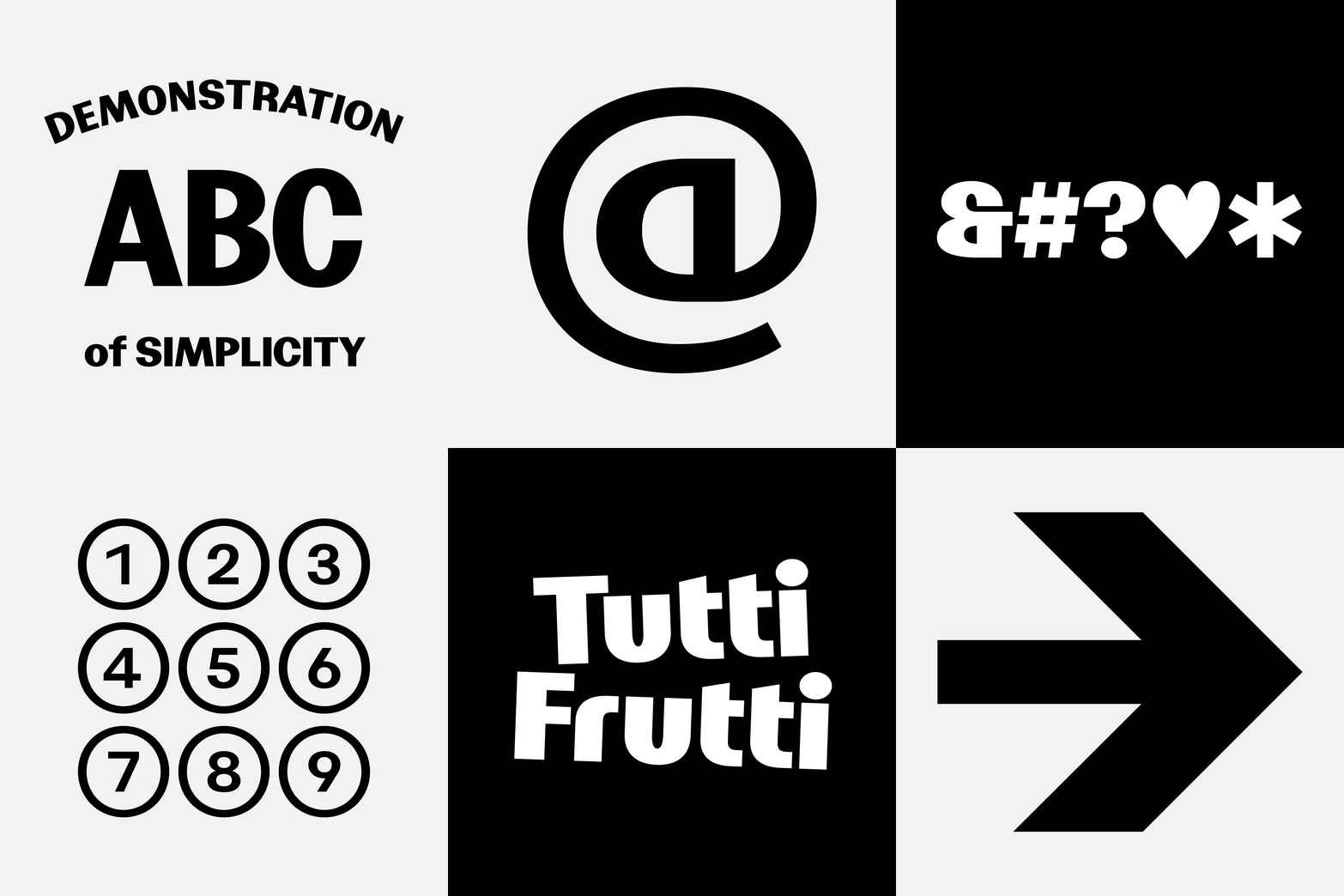
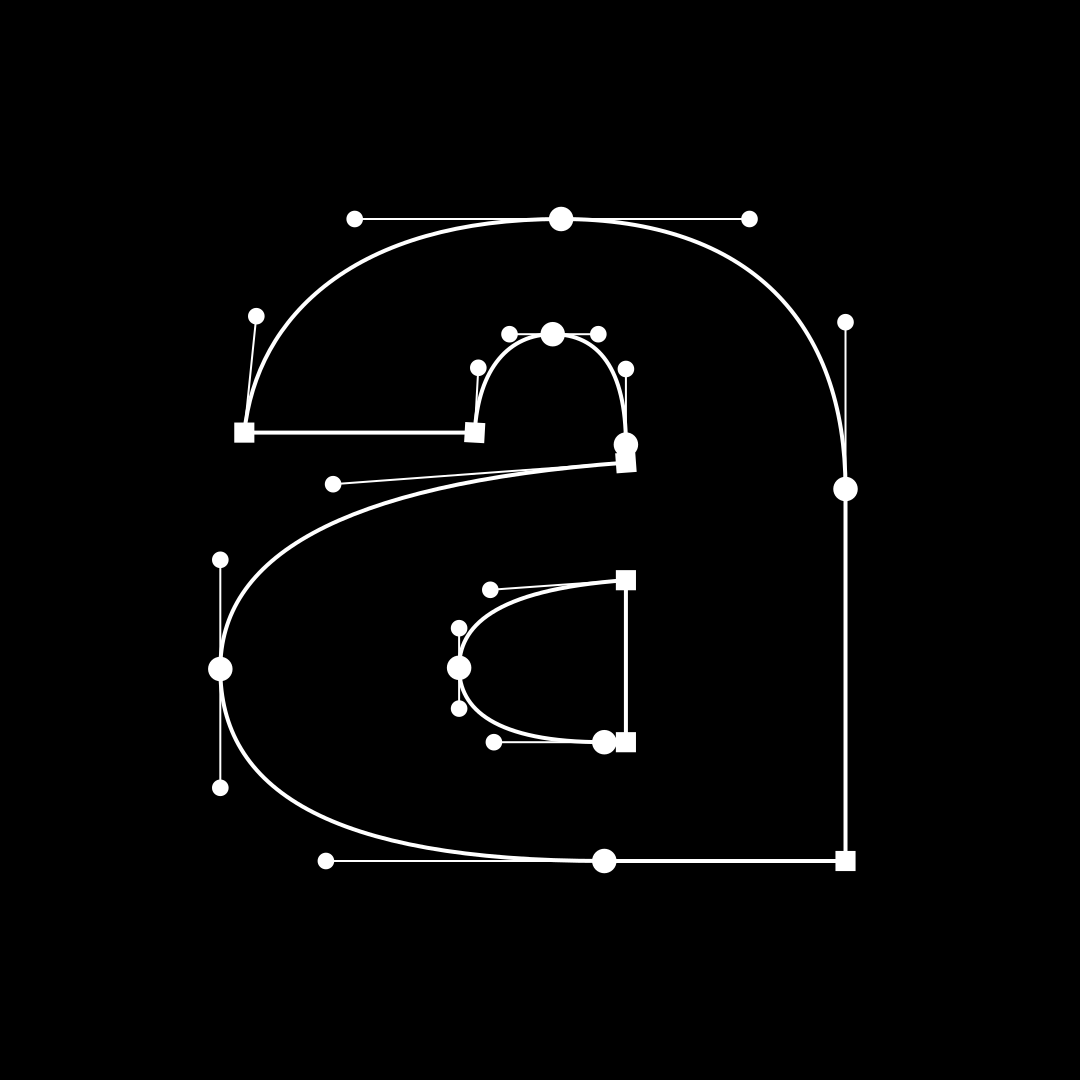
Gutentag is a display typeface built around a simple idea: achieve the strongest possible character with the fewest possible means. Inspired by designs such as Chicago by Susan Kare and Jacno by Marcel Jacno, it combines a geometric foundation with a lively, human touch.
Its forms are clean and economical, yet full of subtle details that give the typeface a warm, approachable and slightly mischievous personality. The result is a distinctive voice that feels confident without being loud, expressive without becoming eccentric.
The family is available in three width variants — Standard, Narrow and Condensed — offering flexibility for everything from compact wordmarks to expansive visual systems. A rich set of alternate characters allows designers to fine-tune the tone of their typography and create identities with a unique and recognizable character.
Designed for branding, logotypes and visual identities, Gutentag brings personality to places where generic geometric typefaces fall short. It offers the clarity of a rational design combined with the charm and individuality of a hand-crafted solution.
- Number of fonts in a family: 15
- Release date: 2026
- Current version: 1.000
- Available formats: OTF, TTF, WOFF, WOFF2
- Variable file: Available upon request with the purchase of the complete type family.
- Design: Tomáš Brousil
- Afar
- Afrikaans
- Albanian
- Aromanian
- Aymara
- Azeri (Latin)
- Basque
- Bemba
- Bislama
- Bosnian
- Breton
- Catalan
- Chamorro
- Cheyenne
- Chichewa
- Chuukese
- Cofán
- Cornish
- Croatian
- Czech
- Danish
- Dutch
- English
- Esperanto
- Estonian
- Faroese
- Fijian
- Finnish
- French
- Frisian
- Friulian
- Galician
- Ganda
- German
- Gikuyu
- Greenlandic
- Guaraní
- Gwich’in
- Haitian
- Hawaiian
- Hungarian
- Icelandic
- Ido
- Indonesian
- Interlingua
- Irish Gaelic
- Italian
- Javanese
- Kashubian
- Kinyarwanda
- Kiribati
- Kirundi
- Kituba
- Kurdish (Latin)
- Ladin
- Latvian
- Lithuanian
- Luxemburgish
- Malagasy
- Malay
- Maltese
- Manx
- Māori
- Marshallese
- Montenegrin
- Náhuatl
- Nauruan
- Navajo
- Ndebele (Northern)
- Ndebele (Southern)
- Norfuk
- Norn
- Norwegian (Bokmål)
- Occitan
- Palauan
- Papiamento
- Pinyin
- Polish
- Portuguese
- Quechua
- Rhaeto-Romanic
- Romaji
- Romanian
- Sámi (Inari)
- Sámi (Lule)
- Sámi (Northern)
- Sámi (Southern)
- Samoan
- Sango
- Sardinian
- Scottish Gaelic
- Seychelles Creole
- Shona
- Silesian
- Slovak
- Slovene
- Somali (Latin)
- Sotho
- Spanish
- Swahili
- Swati
- Swedish
- Tagalog (Filipino)
- Tahitian
- Tetum
- Tok Pisin
- Tokelauan
- Tongan
- Tsonga
- Tswana
- Turkish
- Tuvalu
- Veps
- Welsh
- Wolof
- Xhosa
- Zulu
Styles
Specimen
Gutentag Condensed Light
from 59 EUR
Gutentag Condensed Regular
from 59 EUR
Gutentag Condensed Medium
from 59 EUR
Gutentag Condensed Semibold
from 59 EUR
Gutentag Condensed Bold
from 59 EUR
Gutentag Narrow Light
from 59 EUR
Gutentag Narrow Regular
from 59 EUR
Gutentag Narrow Medium
from 59 EUR
Gutentag Narrow Semibold
from 59 EUR
Gutentag Narrow Bold
from 59 EUR
Gutentag Light
from 59 EUR
Gutentag Regular
from 59 EUR
Gutentag Medium
from 59 EUR
Gutentag Semibold
from 59 EUR
Gutentag Bold
from 59 EUR
Gutentag Condensed Semibold
from 59 EUR
Gutentag Narrow Medium
from 59 EUR
OpenType features
Kickboxer