Teimer

Information

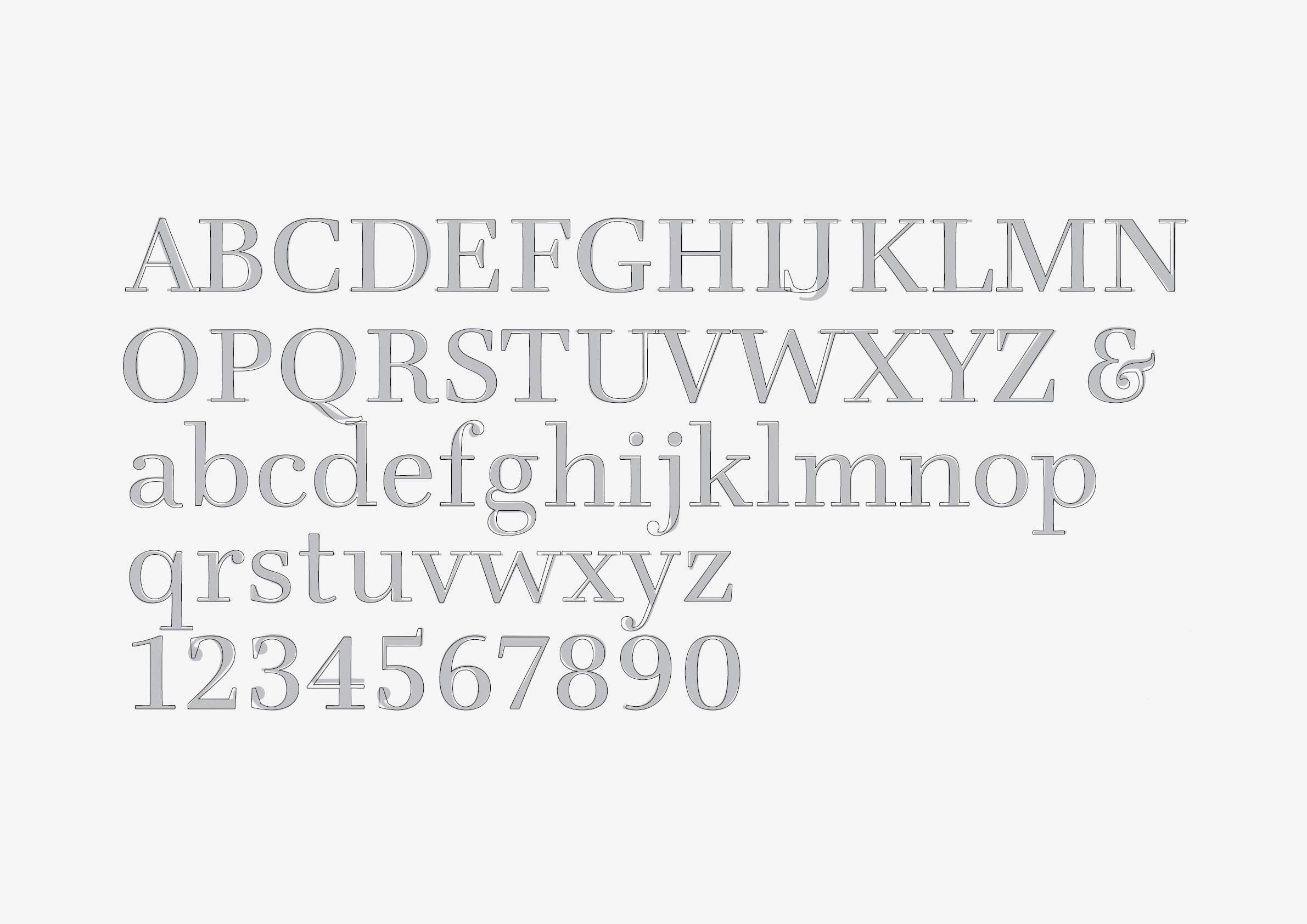
In 1967, type designer and graphic artist Pavel Teimer (1935–1970) created a classicist-style roman and italic typeface. He uniquely reinterpreted the Walbaum and Didot styles, both in their height-to-width proportions and in their design details, thereby significantly distancing himself from these historical models. Teimer’s antiqua has less contrast in its structure, giving the typeface a soft and lively appearance. The notably wide design of the italic, with its calm and balanced rhythm, was dictated by the font’s intended use for a duplex matrix. Long serifs are characteristic of the entire typeface. Teimer’s antiqua and italic, comprising the basic letters, numerals, and punctuation marks, were acquired by the Czechoslovak type foundry Grafotechna, but production never began.

  • Number of fonts in a family: 8
  • Release date: 2006
  • Current version: 1.001
  • Available formats: OTF, TTF, WOFF, WOFF2
  • Design: Tomáš Brousil
107 languages
  • Afar
  • Afrikaans
  • Albanian
  • Aromanian
  • Aymara
  • Basque
  • Bemba
  • Bislama
  • Bosnian
  • Breton
  • Catalan
  • Chamorro
  • Chichewa
  • Chuukese
  • Cofán
  • Croatian
  • Czech
  • Dutch
  • English
  • Esperanto
  • Estonian
  • Faroese
  • Fijian
  • Finnish
  • French
  • Frisian
  • Friulian
  • Galician
  • Ganda
  • German
  • Gikuyu
  • Greenlandic
  • Gwich’in
  • Haitian
  • Hawaiian
  • Hungarian
  • Icelandic
  • Ido
  • Indonesian
  • Interlingua
  • Irish Gaelic
  • Italian
  • Javanese
  • Kashubian
  • Kinyarwanda
  • Kiribati
  • Kirundi
  • Kituba
  • Kurdish (Latin)
  • Ladin
  • Latvian
  • Lithuanian
  • Luxemburgish
  • Malay
  • Maltese
  • Manx
  • Māori
  • Montenegrin
  • Náhuatl
  • Nauruan
  • Ndebele (Northern)
  • Ndebele (Southern)
  • Norfuk
  • Norn
  • Norwegian (Bokmål)
  • Occitan
  • Palauan
  • Papiamento
  • Polish
  • Portuguese
  • Quechua
  • Rhaeto-Romanic
  • Romaji
  • Sámi (Inari)
  • Sámi (Lule)
  • Sámi (Northern)
  • Sámi (Southern)
  • Samoan
  • Sango
  • Sardinian
  • Scottish Gaelic
  • Seychelles Creole
  • Shona
  • Silesian
  • Slovak
  • Slovene
  • Somali (Latin)
  • Sotho
  • Spanish
  • Swahili
  • Swati
  • Swedish
  • Tagalog (Filipino)
  • Tahitian
  • Tetum
  • Tok Pisin
  • Tokelauan
  • Tongan
  • Tsonga
  • Tswana
  • Turkish
  • Tuvalu
  • Veps
  • Welsh
  • Wolof
  • Xhosa
  • Zulu

Styles

Light 
Light Italic 
Regular 
Italic 
SemiBold 
SemiBold Italic 
Bold 
Bold Italic

Specimen

Teimer Light

from 59 EUR

Bordered

Teimer Light Italic

from 59 EUR

Revolting

Teimer Regular

from 59 EUR

Quantize

Teimer Italic

from 59 EUR

Medieval

Teimer SemiBold

from 59 EUR

Combine

Teimer SemiBold Italic

from 59 EUR

Liberally

Teimer Bold

from 59 EUR

Pediatric

Teimer Bold Italic

from 59 EUR

Synopsis

Teimer Regular

from 59 EUR

Bellfounding developed into a commercial craft at a later stage, when independent artisans established permanent foundries in towns such as London, Gloucester, Salisbury, Bury St Edmunds, Norwich, and Colchester. These workshops attracted commissions from surrounding regions, yet medieval founders rarely relied solely on bell production for their livelihood. Instead, they frequently combined this activity with related metalworking trades, including the manufacture of metal goods, household utensils, and even weapons.

Teimer Italic

from 59 EUR

Early bells often produced unsatisfactory sound quality because of inconsistent alloy compositions and a limited understanding of the optimal shape required for harmonic resonance. Over time, however, the form of bells was gradually refined. The angles at the crown and soundbow became less steep, while the waist was shortened and the profile widened toward the mouth. Although tuning techniques remained largely experimental, sets of bells arranged in diatonic scales were eventually installed in important parish churches and monastic institutions.

Teimer Regular

from 59 EUR

An accurate model of the bell’s inner surface is first constructed on a base plate using porous materials such as coke, stone, or brick. This core is then coated with layers of sand or loam, often mixed with straw and horse manure, and covered with clay to achieve a smooth contour. The final profile is shaped using an inner strickle board. This structure, known as the “false bell,” is subsequently dried slowly with gentle heat in a kiln. A layer of molten wax is applied to the false bell, onto which decorative elements, inscriptions, and figures made of wax are carefully added by hand. The entire form is then coated with several layers of fire-resistant clay and enclosed within a metal mantle. The space between the false bell and the mantle is filled with cement and allowed to harden before the mantle is removed. The false bell is then broken away from the inner core, leaving the wax and hardened outer layer in place. Remaining fragments are removed using heat, and the mould is placed over a coke fire to melt away the wax and eliminate residual moisture. As an alternative to using a metal mantle and cement, both the inner and outer moulds may be produced entirely from loam. In this method, the mould is constructed from the inside outward: first the inner core is prepared on a base of coke, stone, or brick, followed by the creation of the false bell with wax decorations applied as described previously. The outer mould is then formed around this structure and reinforced with iron rings and fibrous materials such as hemp. At this stage, a metal staple that will later support the clapper is inserted. Separating agents are applied to ensure that the false bell does not adhere too strongly to the mould surfaces. After the outer mould has been lifted away, the false bell is removed, and the outer mould is placed back over the inner core in preparation for casting. The completed outer mould, often called the cope or mantle, is lowered onto the inner mould and securely fastened, creating a cavity between them that will later be filled with molten metal. Depending on the traditions of the foundry, the assembled mould may be placed in a casting pit to ensure stability and slower cooling, or it may remain above ground in open air. Copper and tin, the primary materials used to create bronze, are melted in a furnace until they reach a liquid state at a temperature of approximately 1,100 °C. In many cases, scrap bronze from older bells is also added to the mixture, particularly when producing a replacement bell, allowing material from the original bell to be reused in the new casting process.

A comparison of the original design of Teimer’s Antikva (solid gray) with the digitized version (black outlines).
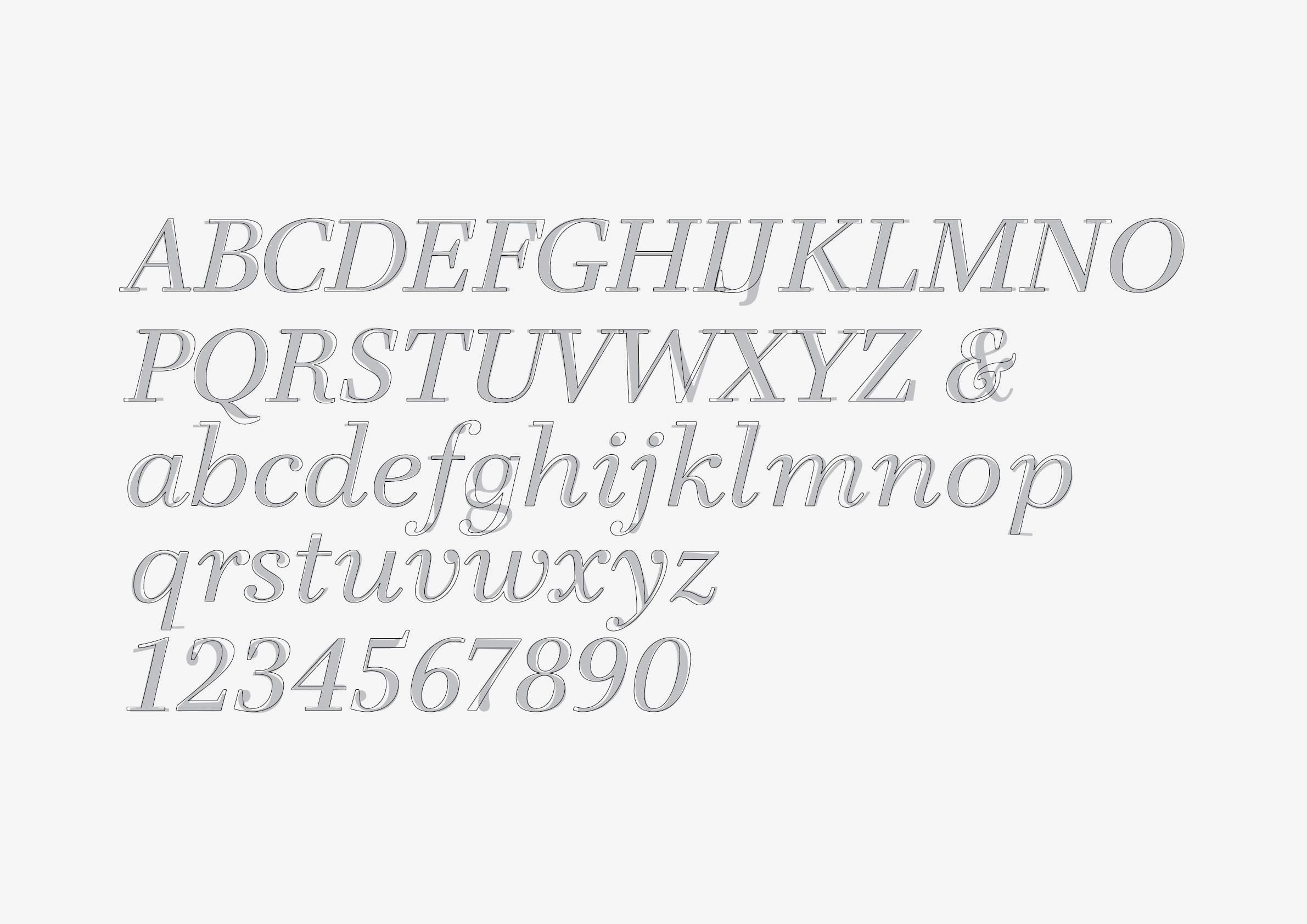
Teimer’s design was intended for a duplexed matrix, meaning that the upright and italic versions of the same characters had to fit within the same width.

OpenType features

Teimer Antiqua

Glyphs